Industry: metal, acrylic and structural fabrication
ERP for fabrication companies: estimation, production and site work
Fabrication jobs start from a drawing and end at a site. In between are estimates, revisions, sheets and sections to buy, work orders, outside processes and erection crews.
- Metal fabricators making structures, frames, cabinets and enclosures
- Acrylic and stainless steel fabricators for signage and displays
- Exhibition stall and event structure builders
- Structural and architectural fabricators doing site erection
- Fabricators serving signage, retail and infrastructure contractors
- Job shops with laser, CNC, bending and welding under one roof
Why ERP
Why fabrication needs an ERP built around the project
A fabricator’s margin is decided in estimation and lost on the floor: extra sheet, a revision that was never re-costed, a galvanising bill nobody matched. ClassicNext links estimate, drawing revision, material, work order, subcontract and site work to the project, so the actual cost sits next to the quoted cost.
- 01
BOQ and estimation from drawings, with material, labour, outside processes and margin as separate lines.
- 02
Drawings and revisions stored as documents on the project, with the current version marked.
- 03
Material planning for sheets, pipes and sections: required, in stock, to purchase.
- 04
Work orders and job cards for cutting, bending, welding, finishing and assembly.
- 05
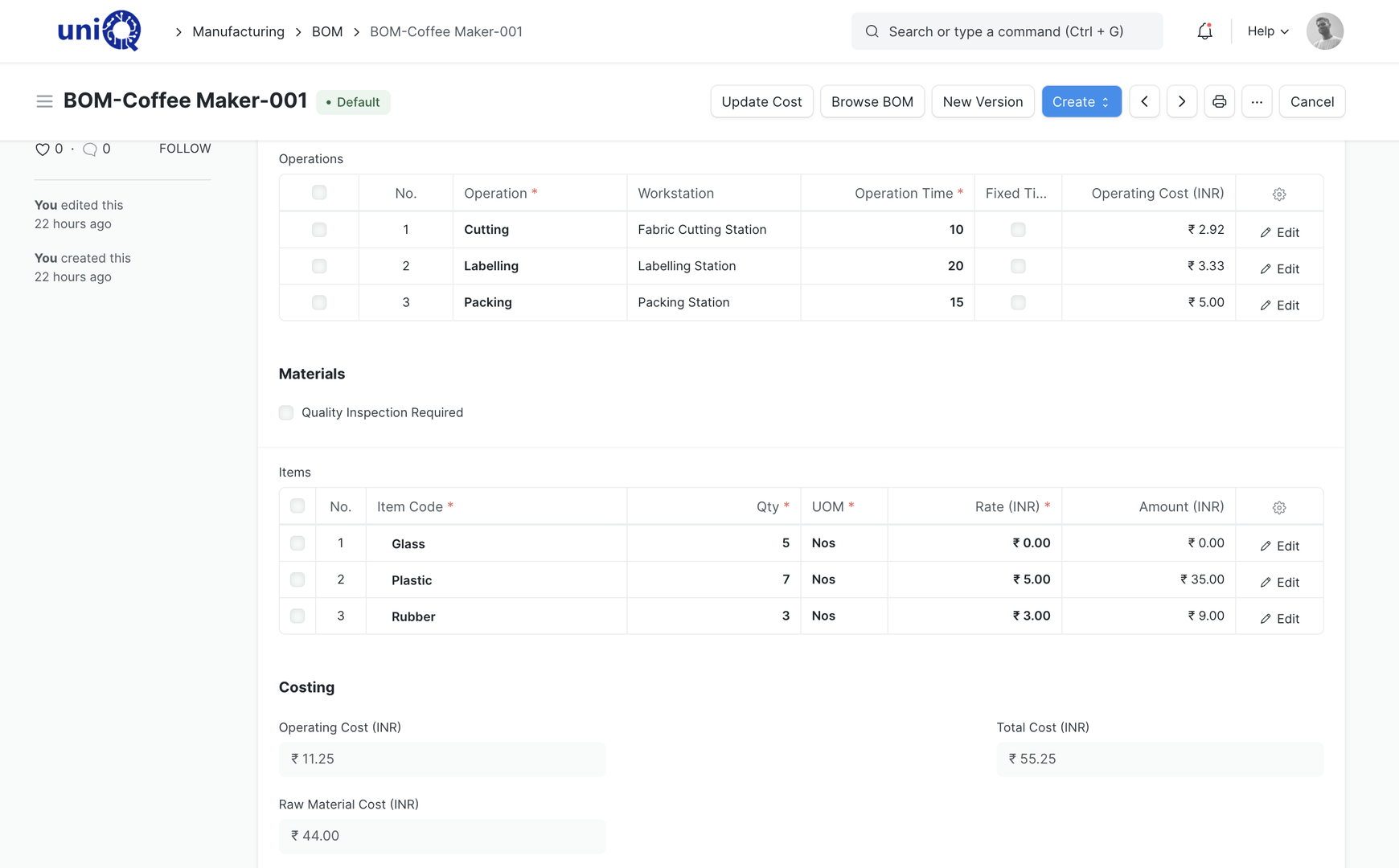
Subcontracted powder coating, galvanising and CNC tracked as material out and parts in.
- 06
Site erection as an installation job with crew, dates, expenses and completion evidence.
Operational problems
Problems fabricators bring to us
- !
Estimates are not reusable
Every BOQ is built from scratch in Excel. The last similar job is not found, and the rate used is whatever the estimator remembers.
- !
Drawing revisions are not costed
The customer changes the drawing after the PO. Production follows the new one; billing follows the old one.
- !
Sheets and sections are bought job by job
Stock lying from the last job is not visible, so the same material is bought again while offcuts pile up.
- !
Outside processes are tracked on WhatsApp
Material sent for powder coating or galvanising is remembered, not recorded. Vendor bills are paid without matching what came back.
- !
Site cost is invisible
Erection crews, cranes, travel and stay are booked as company expenses, not as project cost.
- !
Retention is claimed late
Retention money held by the contractor sits outside the receivables and is followed up only when cash is tight.
Complete workflow
The fabrication lifecycle in ClassicNext
From tender or enquiry to retention release, the fabrication job follows the standard lifecycle. The highlighted steps are where drawings, material planning, subcontracting and site erection add fabrication-specific work.
- Win
- Commit
- Make
- Deliver
- Get paid
- Support
- 1Lead / EnquiryCRM
- 2TenderCRM
- 3BOQ / EstimationCRM
- 4QuotationCRM
- 5Customer POSales & Procurement
- 6Project CreationProjects
- 7ProcurementSales & Procurement
- 8ProductionManufacturing
- 9Quality CheckManufacturing
- 10DispatchSales & Procurement
- 11InstallationProjects
- 12CompletionProjects
- 13BillingFinance
- 14CollectionsFinance
- 15AMC / ServiceService
Modules
The modules this industry uses most
- ManufacturingBOMs, work orders, job cards, costing
- Project ManagementSites, milestones, tasks, profitability
- CRMLeads, quotations, tenders, pipeline
- Sales & ProcurementOrders, purchase requisitions, RFQs, POs
- Financial AccountingProject-wise profitability, GST, receivables
- HR & PayrollAttendance, payroll, expenses, appraisals
- Asset ManagementMachines, vehicles, installed assets
Example business processes
How the day-to-day work runs
Estimation from drawings
Material planning and purchase
Fabrication and outside processes
Site erection, billing and retention
Management dashboards
What the owner and the works manager see
Every tile is a live view over transactions, configured during implementation. Not a spreadsheet someone compiles on Monday.
Projects by stage: estimated, ordered, in production, at site, billed
Quoted cost vs actual cost per project
Sheet, pipe and section stock by size and grade
Work orders by status and workstation load
Material sent to subcontractors and not yet returned
Site jobs in progress by crew and location
Billed, unbilled and retention amounts per project
Scrap and rework by job and reason
Implementation
Five steps, defined outputs
- 01Business Discovery
- 02Process Mapping
- 03Configuration
- 04Data Migration & Training
- 05UAT & Go-Live
- Current-process walkthrough · Pain points by department · Module shortlist and rough scope
- Process maps per department · Document and approval flows · Gap list: standard vs configured vs custom
- Masters and chart of accounts · Roles and permissions · Print formats and reports
- Master data and opening balances · Role-based training sessions · User guides for daily work
- Scripted user acceptance tests · Go-live checklist and cut-over · Post-go-live support window
Pricing starting point
Most businesses here start with Operations ERP
Final pricing depends on modules, users, locations, integrations, data migration and customisation.
Foundation ERP
from ₹2.95 lakh + GST
- Finance
- CRM
- Sales & Procurement
- Basic Projects
Operations ERP
from ₹5.95 lakh + GST
- + Manufacturing
- + Full Projects
- + HR & Payroll
- + Service
Signage Enterprise ERP
from ₹8.95 lakh + GST
- + Assets
- + Tender tracking
- + Multi-site rollouts
FAQ
ERP for fabrication: common questions
Can estimates be built from previous jobs?
Yes. Estimates and BOMs are copied from templates or from past projects and adjusted, so the rate and material list from a similar job are the starting point. The estimation sheet layout is configured during implementation to match how you cost today.
How are drawings and revisions managed?
Drawings are attached to the project, quotation and work order with a revision number and status. Which revision production should follow is marked on the work order. Formal drawing approval workflows are configured during implementation.
Can we track material sent for powder coating or galvanising?
Subcontracting orders record the material sent, the finished parts received and the vendor’s bill against the project. Service charges land on the job’s cost.
Does it handle site expenses and crew attendance?
Site expenses are claimed against the project, and crews mark attendance with location from a phone. Biometric attendance is a separate integration, scoped if needed.
How is retention money handled?
Retention deducted by the customer is recorded per invoice or per PO with its expected release date, and appears as a receivable to follow up. The accounting treatment follows your CA’s practice and is set up during implementation.
What is the cost for a fabrication company?
Pricing is starting-from and depends on scope: users, modules, estimation set-up, drawing workflows and integrations. A scoping call gives you a fixed proposal.
See ClassicNext set up for a fabrication business
A 30-minute fitment call: we understand your current process, show the modules that matter to you, and give indicative pricing. No generic tour.
Prefer to start smaller? Get a process audit or request pricing.